
House of Bid
How to spot a real antique vs. a reproduction
A real antique usually shows hand-tool marks, materials and hardware consistent with its claimed era, and wear that's uneven and concentrated where hands and feet actually touched it. A reproduction often has machine-perfect edges, modern materials hiding under an aged finish, and wear that's too even to be real. No single clue proves age on its own — look at construction, materials, and wear together.
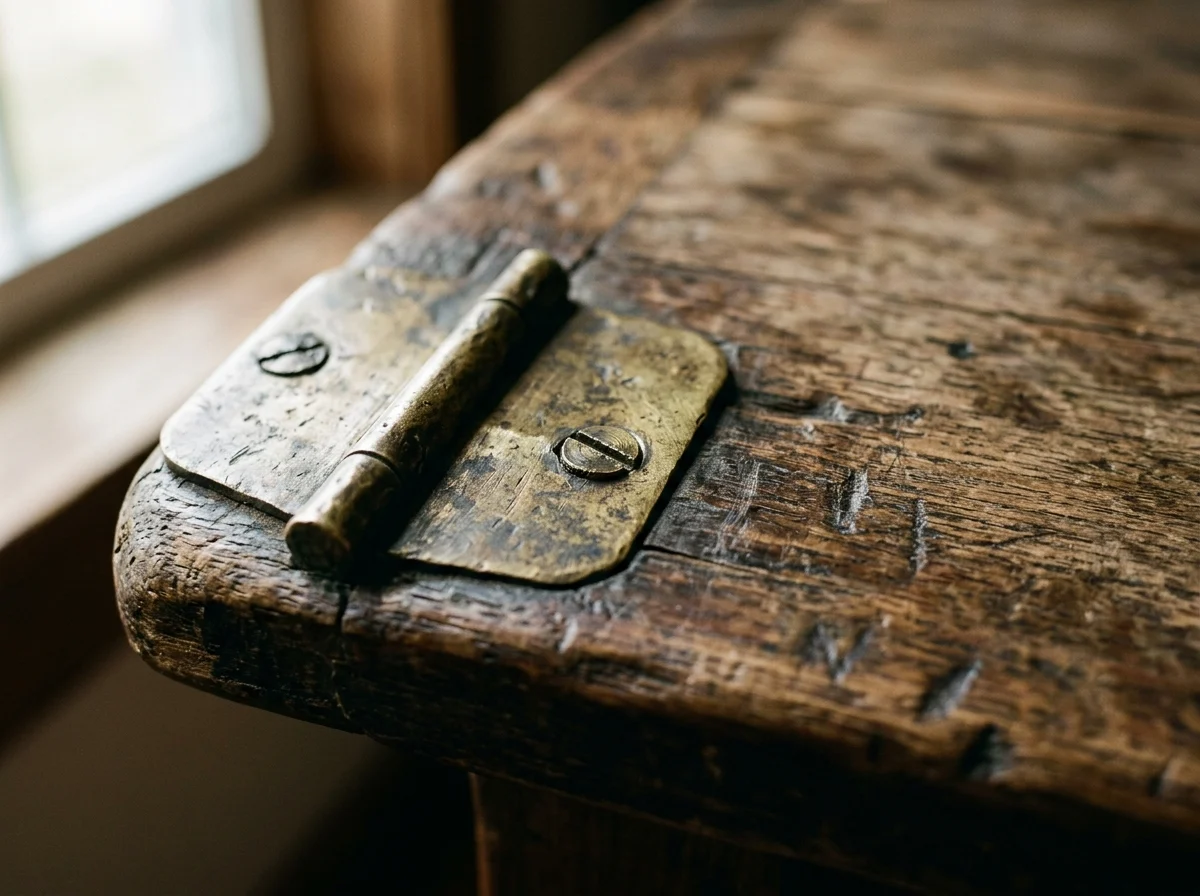
Tool marks and construction methods
Before machine tools became common, furniture was cut and shaped by hand, which leaves slightly irregular saw marks, uneven dovetails, and joinery that varies piece to piece. Machine-era production leaves straight, perfectly spaced marks and identical joints repeated across a piece. Screws are another tell: hand-cut screws have irregular, off-center slots, while modern machine-made screws are uniform. A piece that looks 'too perfect' underneath, where it wasn't meant to be seen, is worth a second look.
Materials that didn't exist yet
Plywood, particleboard, certain synthetic glues, and some modern hardware finishes didn't exist before specific dates, so finding them inside a piece claimed to be much older is a red flag. Check hidden surfaces — drawer bottoms, the underside of a tabletop, the back panel — since reproductions often use period-correct materials on visible surfaces and modern materials where no one is expected to look. A quick material check on hidden parts often tells you more than the visible finish does.
Wear patterns that are too even
Real wear happens where hands, feet, and use actually land — a chair's arms, a drawer pull, the front stretcher where feet rest. It builds up unevenly over decades and follows the logic of how the piece was used. Reproductions sometimes have wear added deliberately with sandpaper, chains, or stain, and that faked wear tends to be spread evenly across a surface instead of concentrated where real use would put it. Ask whether the wear pattern makes physical sense.
Patina and finish
Patina is the color and texture change that builds up on wood, metal, or leather over long exposure to air, handling, and light — and it's genuinely difficult to fake convincingly because it forms in layers over time. A finish that looks uniformly dark or aged all over, with no variation between protected and exposed areas, is more likely a stain or chemical treatment applied quickly. Genuine patina tends to be lighter in spots shielded from light and darker where hands touched it most.
Questions
Can a single detail prove a piece is genuine?
- No single mark or feature proves authenticity on its own. Appraisers weigh construction, materials, wear, and patina together, since a skilled reproduction can fake one detail convincingly but rarely all of them.
Does a maker's label guarantee it's real?
- Not by itself. Labels and stamps can be reproduced or added to an unrelated piece, so a label is one clue among several, not proof.
What's the fastest way to check a piece at home?
- Look at hidden, unfinished surfaces first — drawer interiors, undersides, the back. Materials and construction quality are harder to fake where nobody expects them to be inspected.